
Calhoun Parole Versus Probation
Both are community supervision, but they begin differently. DCS supervises felony individuals granted parole or reprieve and people serving probated or split sentences. The State Board of Pardons and Paroles makes state parole decisions. The Calhoun sentencing court creates probation terms.
| Record | Parole | Probation |
|---|---|---|
| Starting authority | State Board action after prison confinement | Court sentence or order |
| Core public check | Parolee Search and Board status tools | Court sentence plus DCS verification |
| Local office | Cairo DCS Field Office | Cairo DCS Field Office for felony cases |
| End record | Parole discharge or completion | Court or DCS completion record |
Verify Calhoun Post-Release Supervision
- Confirm the person is no longer held by Calhoun County Jail or GDC.
- For parole, search the State Board's parolee database by first and last name and compare identifiers.
- For probation, obtain the sentencing order and docket from the Calhoun County Clerk.
- Contact DCS or the Cairo Field Office to verify the serving office and public status.
- If a public page is unclear, request the specific public supervision record from DCS.
- Ask whether the term is active, completed, revoked, or associated with an absconder or warrant status. Do not infer a status from silence.
The DCS felony-supervision page confirms the agency's role.
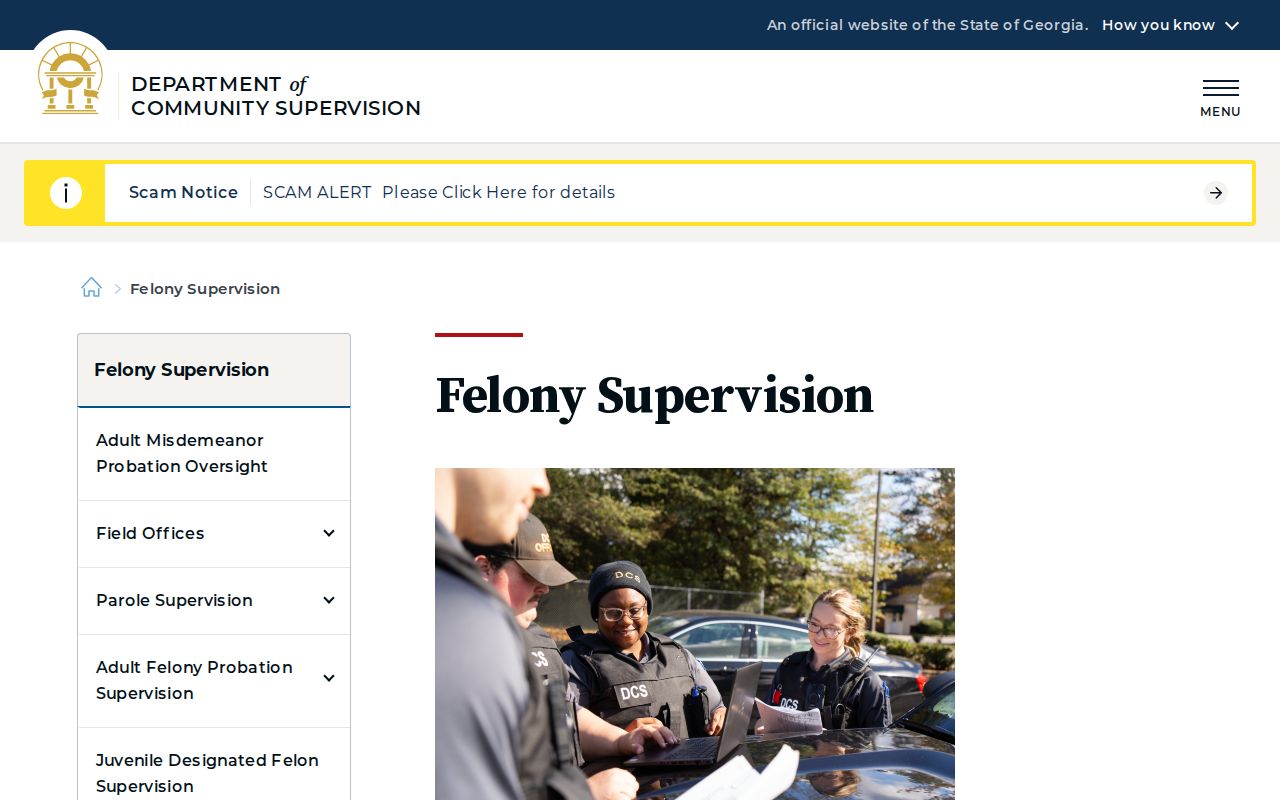
This statewide explanation should be paired with the local field office and court record.
Calhoun Supervision Office in Cairo
Calhoun County's local felony supervision office is outside the county. DCS lists the Cairo Field Office as serving Baker, Calhoun, Decatur, Grady, and Mitchell Counties and the South Georgia Circuit. This is more useful for a local supervision question than sending every caller to Atlanta.
240 2nd Avenue SE
Cairo, GA 39828
(229) 377-5347
Fax: (229) 377-4396
Monday through Friday, 8:00 a.m. to 4:30 p.m.
Use the official Cairo office listing to verify details before a visit. The office handles supervision, not jail custody or release-list requests.
Calhoun Violations and Absconder Status
Conditions vary by the sentence and supervision plan. They may govern reporting, travel, treatment, conduct, or payment, but only the order and DCS record establish the person's actual terms. A violation allegation does not itself explain the final outcome. The court, Board, or DCS process may lead to continued supervision, modified terms, revocation, or custody.
An absconder is a supervised person whom the agency reports as having stopped required contact or whose location is unknown. It is not merely someone who moved. A warrant may exist, but the public should not try to detain anyone. Report urgent safety matters to law enforcement and direct status questions to DCS.
Georgia VINE focuses on custody changes. It may help with a later jail or prison event but is not a complete supervision history. Use VINELink Inmate Search as an alert channel, then verify with DCS or the court.
How Calhoun Supervision Ends
Supervision can end at successful completion, discharge by the responsible authority, expiration under the controlling order, or another formal action. Release from jail does not start or end every term automatically. A split sentence can move a person from confinement to probation, and parole can continue after a state-prison release.
For parole, seek the Board or DCS record that states completion or discharge. For probation, use the sentencing docket, later court orders, and DCS status. A record restriction may change public access to a case, but it should not be treated as proof that all agency records vanished. The Calhoun released-inmate search explains how jail, court, and state records fit together.
Calhoun Parole Hearings and Decisions
The State Board may establish a Tentative Parole Month, deny parole, or later change a prior decision before release. A TPM is a month for final review, not a final release date. The Board's parole process and eligibility guidance should be read with the person's GDC sentence record.
Monthly open Board meetings do not decide individual offender cases. The Board's annual material says cases are not discussed and parole decisions are not made at those meetings. A public meeting notice therefore cannot verify a person's outcome.
The State Board homepage is the official starting point.
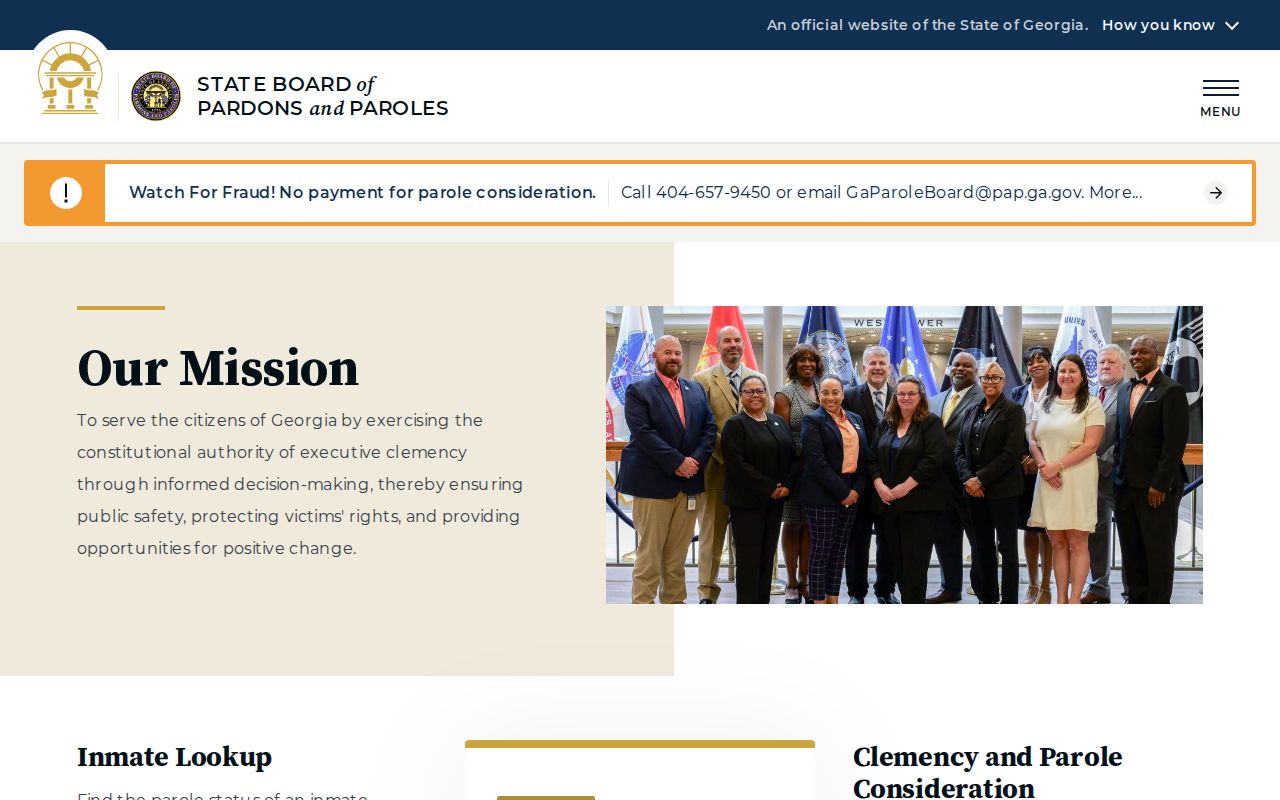
Use its parolee search after release and its TPM tools during consideration.
Request Calhoun Supervision Records
DCS identifies an Open Records Custodian at 2 Martin Luther King Jr. Drive SE, East Tower, Suite 866, Atlanta, GA 30334. Questions may be directed to 404-463-2072, with fax at (404) 463-0327. DCS may bill under the Georgia Open Records Act. Ask for a narrow public record by full name, date range, and supervision type.
The DCS contact and records page provides the current route.
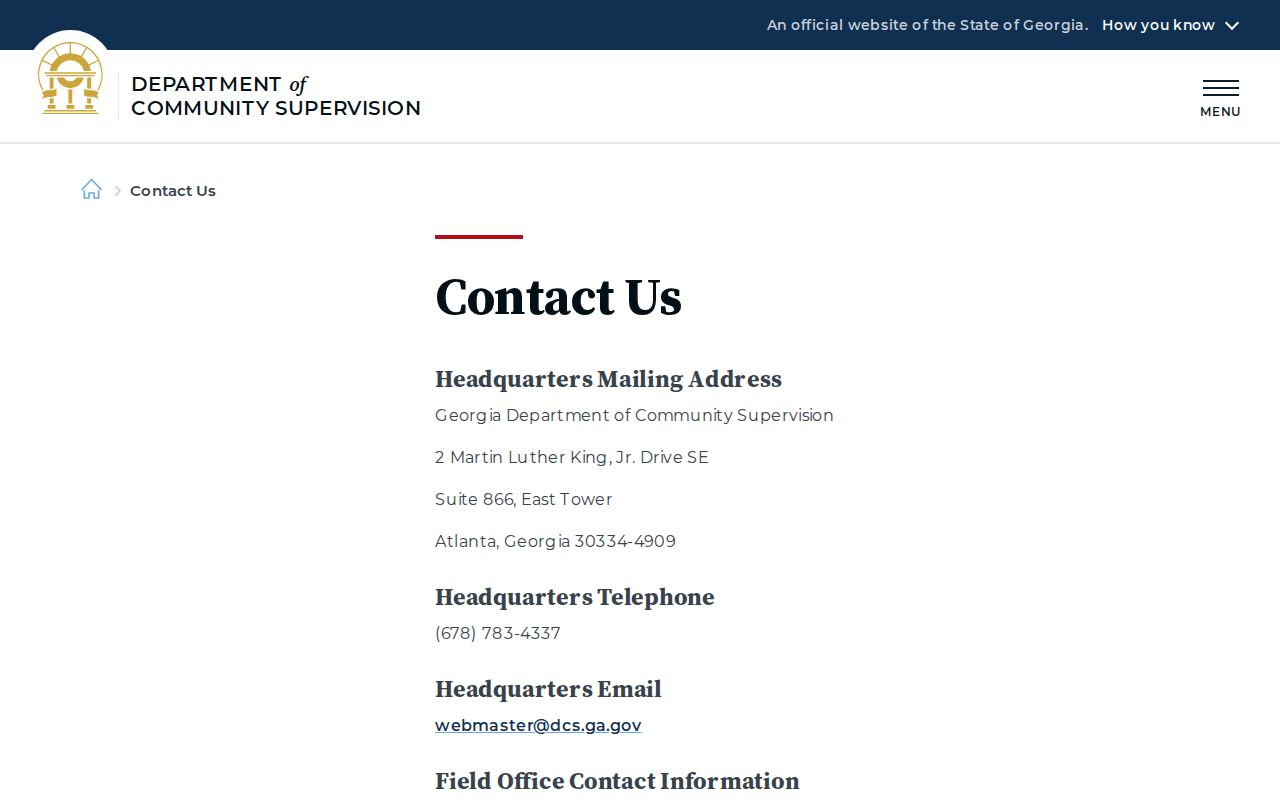
For probation terms, also request the Calhoun court order. DCS confirms supervision administration; the court file explains the sentence.
Calhoun State Prison Reentry Programs
GDC lists Re-Entry among Calhoun State Prison programs, along with Thinking for a Change, Moral Reconation Therapy, Matrix programs, education, vocational work, and faith or character programming. This supports a focused navigation point: a person leaving the state prison may have a GDC release and DCS supervision path distinct from someone leaving Calhoun County Jail.
The program list does not establish that a specific person enrolled, completed a course, or received a particular service. Verify individual release and supervision through GDC, the Board, and DCS. Do not attribute state-prison programming to the county jail.
Cross-Check Calhoun Supervision Records
A complete check uses three records because no single source explains every stage. The Calhoun court file shows the sentence imposed, including probation or a split sentence. The Board's parole tools address parole consideration and post-release parole status. DCS administers felony supervision in the community. Start with the record that created the status, then use the others to confirm what followed.
The Calhoun clerk says criminal cases filed since January 1, 2000 are computer-indexed and transmitted to the state weekly. Request the sentencing order, probation order, revocation order, and docket when the public index does not answer the question. The clerk's phone is (229) 849-2715. Its weekday hours run 8:00 a.m. to noon and 1:00 p.m. to 5:00 p.m. Older cases may require direct help.
A GDC offender record showing no current facility does not automatically mean all supervision ended. Check the parolee database and DCS. Conversely, a DCS record does not prove the person was released from Calhoun County Jail on a certain day. Obtain the jail release timestamp for that fact.
Georgia Parole Eligibility Context
O.C.G.A. 42-9-45 contains a general eligibility framework of one-third of the sentence or nine months, whichever is greater, subject to exceptions. Serious violent felonies, recidivist rules, and life terms can produce different timing. The State Board's eligibility and parole-process pages should be used instead of applying the general rule to every person.
For parole-eligible life sentences involving serious violent felonies, Board guidance distinguishes offenses before July 1, 2006 from those on or after that date, with initial consideration described at 14 years and 30 years respectively. Those are consideration points, not promised release dates. The Board may deny parole or set a later tentative month.
When a TPM appears, read it with GDC custody and the Board's final-review explanation. After actual release, the parolee search and DCS become the stronger supervision checks. For a person at Calhoun State Prison, this chain is distinct from the county-jail and local-probation path.
Calhoun Agency Contact Boundaries
The Cairo office verifies felony supervision serving Calhoun County. It does not issue a jail release record. The State Board answers parole consideration and eligibility questions through its official channels. DCS headquarters handles its own open-records route. The Calhoun clerk supplies court orders, and the sheriff or jail supplies local booking and release information.
Use the full name, date of birth, case number, GDC number, and supervision type when available. Ask for a public status or named record. Do not ask one office to guess about another agency's file. If records conflict, preserve the exact status terms and dates, then ask the originating offices which entry is current.
Prove Calhoun Supervision Discharge
A completed jail or prison release does not establish discharge from parole or probation. Ask for the record that ends the particular term. For parole, compare the parolee database, DCS status, and any Board discharge record. For probation, read the Calhoun sentencing docket for a completion, termination, revocation, or later order. If the public status is unclear, direct a narrow request to DCS or the clerk.
Keep release and discharge dates separate. The first marks the end of physical custody by one agency. The second marks the end of a supervision term. A person may also finish one term while another court case or sentence remains. Record each source, date, and exact label before drawing a conclusion.
When the public parolee search fails, do not assume the term ended. Confirm spelling and identifiers, then contact DCS or use its open-records route. A probationer may appear only through the court sentence and DCS, while a parolee may appear through Board data. The source difference explains many missing results.